


This oil pie crust recipe is an easy low-stress pie dough that requires minimal prep. Use this recipe when you're looking for a vegan pie crust that doesn't use butter! It's delicious with sweet and savory pies.
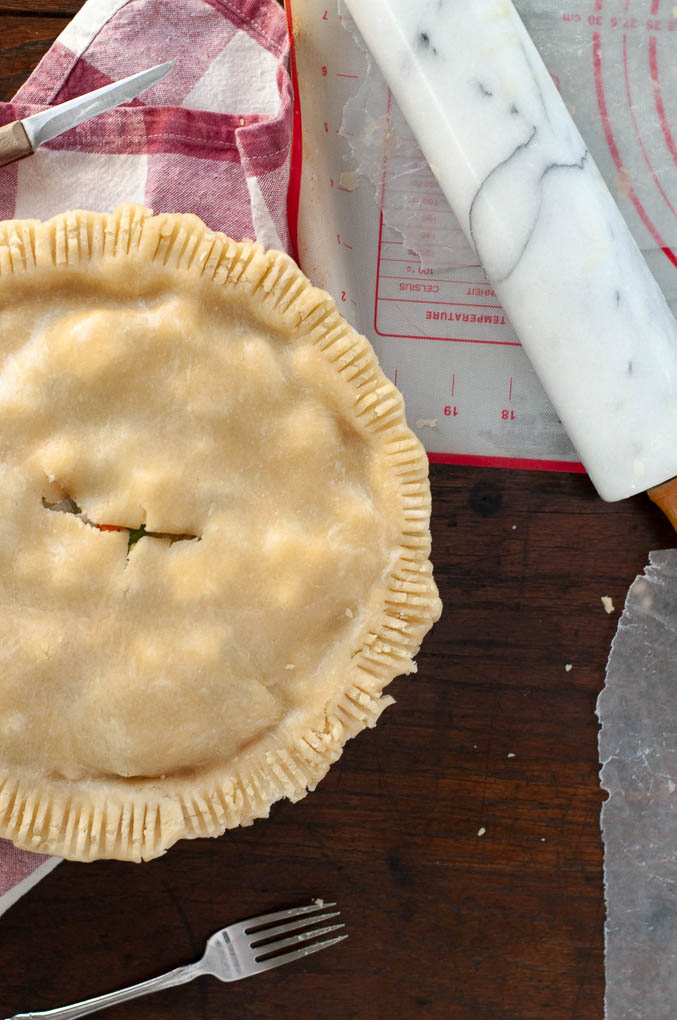
When it comes to comfort food cooking, there's no getting out of knowing how to make a pie crust. I feel like pie is like the most elevated form of a casserole (which is one of my favorite kinds of comfort food): not only do you get a well rounded meal, or dessert, in one slice, but that slice is surrounded by flaky, indulgent pie crust.
Oil pie crusts are easy to work with because, unlike butter, the fat is already melted. This means that it incorporates into the flour more easily than a solid fat does. The end result is still a flaky, delicious, and satisfyingly rich crust.
Here's how to make a perfect oil pie crust that's flaky, easy to make, and just plain hard to get wrong!
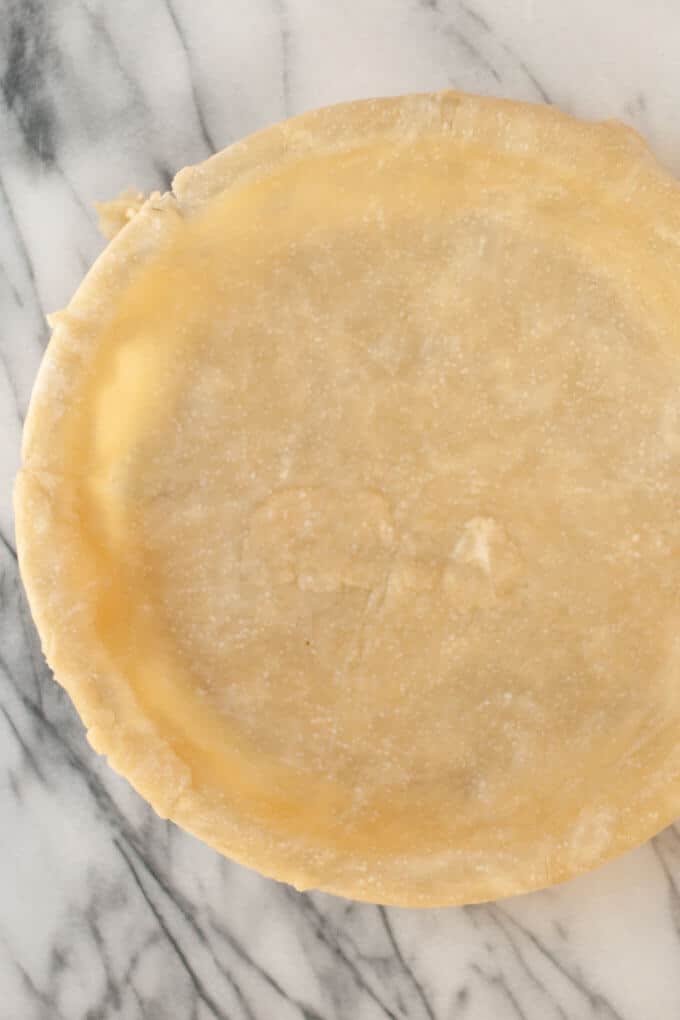
This post contains Amazon affiliate links. As an Amazon associate I earn from qualifying purchases; read my disclaimer policy for more information.
The Components of an Oil Pie Crust
Oil
Most oils that are liquid at room temperature work well in this pie crust recipe. Oils with a neutral flavor, like canola or vegetable oil, work best in pie crust.
Olive oil works in pie crust, but it may impart a slightly olive oil flavor to final product. Be sure that you're not heating the crust to over 375 degrees Fahrenheit, as this is the smoke point of many olive oils.
The takeaway: for a basic pie crust choose an oil that has a neutral flavor.
Flour
Low protein flours work best for pies because they yield a more tender crust. The higher the protein content of the flour, the tougher the dough.
- Pastry flour (8-10% protein) for a super tender pie crust, but it is more delicate and may be a bit more difficult for beginners to handle.
- All-purpose flour (11-12%) is a good middle-ground flour and also works well for pie crust. This is my favorite flour that is only available in the south (or online!).
- Bread flour (~13-14% protein) yields a tougher result, so I don't recommend bread flour for this recipe.
- Whole wheat flour will make a more grainy, crumbly texture. Because of this, it's trickier to work with whole wheat flour.
The takeaway: All-purpose flour is usually your best bet for a standard oil pie crust for beginners.
Salt
The primary role of salt is to contribute flavor to the crust. While it does contribute a bit to gluten formation, it's most noticeable effect is in taste.
The takeaway: Salt enhances the flavor of pie crust; use as little or as much as you prefer.
Water
Ice cold water is used in pie crust because cold water makes the pastry dough easier to work with. Add the ice water one tablespoon at a time, as the amount of liquid needed will vary based on kitchen conditions like humidity and temperature.
For actually ice cold water, add a few ice cubes to a bowl (or glass) or water and scoop water out from the dish a tablespoon at a time as you add it to the dry ingredients.
Making the Crust
The secret to rolling oil pie crust
Okay, maybe this isn't a secret. People have definitely been doing this for years. Personally speaking, my grandma has been doing this for years. Back in high school I tasked my grandparents with mailing me five of their favorite recipes.
One of those recipes was my grandma's "Pat in Pat Oil Pie Crust" (because you would pat the pie crust into place in the pie dish). This recipe is a little different, but is based on the same secret ingredient:
Wax paper!
Simply place your pie dough between two pieces of wax paper before rolling it out. This is the wax paper that I use.
No extra flour means no extra gluten formation, which means tender, flaky pie crust. No direct contact with the rolling pin means no pie dough sticking to the rolling pin! Be amazed as your pie crust comes off of the wax paper easily as can be.
Okay, that's enough about oil-based pie crust for now. Check out my tried and true recipe below! It works well for sweet and savory recipes alike.
The steps to making an oil based pie crust
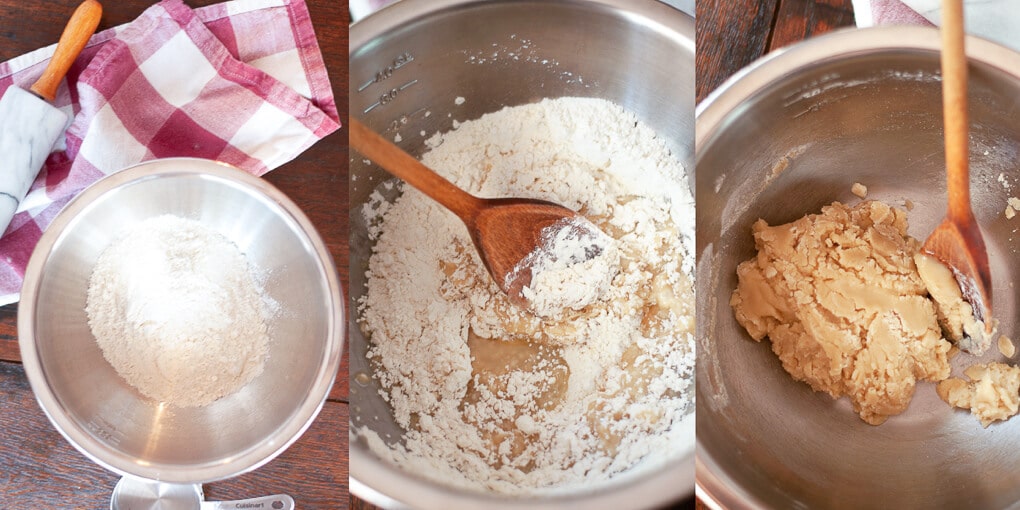
Combine the dry ingredients (flour, salt) in a medium mixing bowl (this is my go-to mixing bowl set). In a small bowl or liquid measuring cup, add the oil and 5 tablespoons of ice water. Pour the liquids into the dry ingredients.
Mix together with a wooden spoon until a rough ball forms; add additional 1 tablespoon of ice cold water if it is too crumbly.
Divide into two evenly sized dough balls. Cover and let rest in the fridge for at least 15 minutes. Place each dough ball between a large sheet of wax paper (at least 12 in x 12 in).
Roll out with a rolling pin until the dough is 12x12 inches. I prefer to use a marble rolling pin like this one.
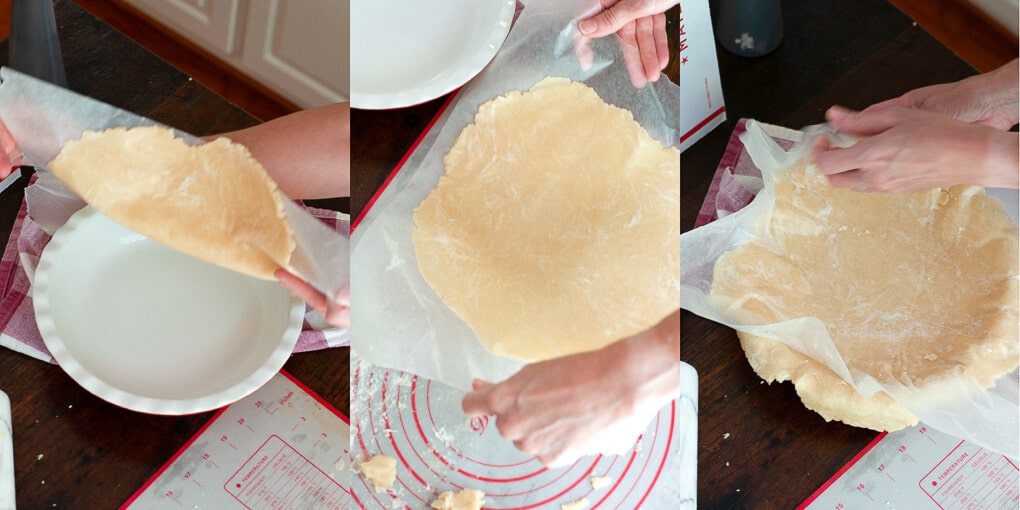
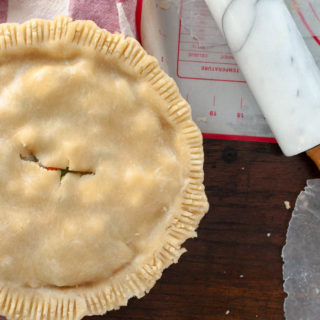
Invert the wax paper and center the pie dough on a pie dish. Carefully peel the wax paper off of the dough (as seen above). Cook according to your recipe instructions.
One of my favorite ways to use this crust is in my Vegan Pot Pie with Tofu and Veggies. It also makes a great vegan pumpkin pie crust!
Recipe
Want to Save This Recipe?
Enter your email & I'll send it to your inbox. Plus, get great new recipes from me every week!
By submitting this form, you consent to receive emails from Cozy Peach Kitchen
How to Make a Perfect Oil Pie Crust
Ingredients
- 2 and ½ cups all purpose flour
- 1 teaspoon salt
- ⅔ cup canola or vegetable oil
- 6 tablespoons ice cold water
Instructions
- Combine flour and salt in a medium mixing bowl. In a separate mixing bowl, combine the oil and 5 tablespoons of ice cold water; don't mix the liquids together.
- Add liquids to the flour and salt mixture. Stir with a fork until a ball forms; add 1 tablespoon of ice water if it is very crumbly and not holding. It is okay if the dough is not totally cohesive (some crumbles may exist).
- Divide the dough into two equally sized balls. Place in an airtight container and let rest in the fridge for at least 15 minutes.
- For one pie crust, place the dough ball between two pieces of wax paper. Use a rolling pin (I recommend using a marble one like this) to roll out until it reaches 12 inches in diameter.
- Carefully peel the top layer off of the wax paper. Invert the pie crust into a pie plate and carefully peel the wax paper off of the dough.
- Bake the pie dough according to pie recipe.
Notes
- Recipe makes 2 12" pie crusts. I usually use a 9" pie plate for baking, but you can also use disposable containers. Do note that different materials will bake the crust at different rates.
- These are my favorite glass mixing bowls.
- Pie dough can be frozen in an airtight container. Let thaw fully in the refrigerator prior to using.
- I have made this recipe several times without wax paper and I don't find the result as satisfying. This dough can be made without the wax paper step, but you will likely have to pat the crust into the pan with your fingers instead of transferring the pie crust in one piece.
- Calorie calculations reflect 6 servings for each pie crust, or 12 total servings.
Heather says
This was the best ever using oil and I have tried many others. Nice and flakey when I bake it without filling. perfect!!
Pie lover says
I've been using an oil crust for decades, but like your formulation. Thank you! WIth an oil crust, I do blind bake, but it needs none of the supports that butter crusts need. I am careful to prick the crust generously with a fork and then I do check it while it bakes to make sure air pockets that form get poked to let the air out, but otherwise, the crust stays upright and does not slump down like traditional crusts do.
Gino Malocca says
Hi, could you tell me how long and at what temp you blind bake for please?
Gino
Enen says
I made a single crust and it was crumbly and didn't work at all. I was very disappointed.
July says
Made this pie crust last week, im prediabetic so i thought of making something without added sugar and this was perfect.
But one question:
Can i replace vegetable oil with olive oil ?
Cassidy Reeser says
Olive oil works, the flavor might just come through in the crust.
Amanda says
Try a flavored, quality Olive Oil. I used Sweet Cream Butter Oli e Oil and it was amazing!
Leslie says
I use grapeseed oil--no flavor, high smoke point too..What about parchment paper instead of wax?
Cassidy Reeser says
Grapeseed oil will work, as will parchment paper.
Barbara says
I just assembled this crust and I agree that the wax paper technique works really well. I thought the crust looks and feels a bit oily and has a marbled look. I really hope it turns out well because it comes together very easily. Is the oily feel and the marbled look normal?
Cassidy Reeser says
If it rolled out without cracking too much or pulling apart, it should be fine. It is a touch oily and the marbled look sounds normal, as long as it doesn't feel dry. I bet it will be great. Enjoy!!
Anita says
I made this crust today to use in a chocolate pie. Followed the directions and baked crust until done as the filling cooked on the stove. Glad I tasted a small piece of crust before I wasted my filling. It tastes like sand. Awful crust. I threw it away and used a graham crust I had.
Merrilyn MCelderry says
Try again.. you will get it.. it is really delish but have to follow the instructions best you can.. I baked it in my cast iron skilled I had no wax paper or way to roll it but it was soooo darn good to eat on its own. ha ha blessings and give it another shot. x
Laura says
Best pie crust I've ever made easiest pie crust ever made and it's always consistently excellent thank you
Edd Etter says
I was very (pleasantly) surprised at both how easy this recipe was to prepare and how light the crust was after baking! I thought it would be heavy and chewy but it was wonderful! Thank you so much for saving me time, effort, and stress compared to when I made "conventional" pie crusts!
Elaine says
This is the easiest pie crust I've ever made. And, it does come out flaky like a pie crust should. I am just a little confused about the instructions on the ice water. Should you add one tablespoon at a time and stop when the dough comes together and forms a ball? Or should you add the 5 tablespoons and only add the sixth if too crumbly? I've found that my dough comes together before I add the 5th tablespoon. Wish this was more clear. Otherwise, a very nice recipe which will be my go-to pie crust for both savory and sweet pies!
Cassidy Reeser says
Thanks for the review! I add one tablespoon of ice water at a time until it holds together, since I've found for some people it takes only 4 or 5 tablespoons and others up to 7-8.
Barbara a Monnette says
Appreciated the info. but didn't have oven temperature or baking time noted.
Patricia Salk says
I have been making oil crust for years and find it absolutely fabulously flaky.
My recipe differs in the fact that I use 2 cups of all purpose flour, 1/2 full cup vegetable oil, 1/4 cup of milk. Mix and roll out immediately (with out refrigeration).
I overlap two pieces of wax paper and put 1/2 the recipe on it and cover with two more overlapping pieces of was paper. When correct size pull off top layer and put in pie plate. Roll top layer same way, then add filling to pie plate, add butter and cover with top layer of crust. It should not crumble. Best pie dough ever.
I never tried freezing the dough by itself, but have frozen whole pie before baking, only tried with apples. They came out perfect. I always mound my pies with apples and bake till they run over.
Sharon says
I’m also a milk gal in my oil crust. First time I made it as a young adult in my own apartment I mixed up the ratio of milk to oil, reversing them. What a mess! Ever since, have always said to myself before starting “OIL crust, Sharon, not milk crust”.
Laurel Hansen says
I've been making oil pie crusts for decades, and this is the best I've ever used. The crust mixes smoothly, rolls out beautifully, and tastes delicious!
Cassidy Reeser says
Thanks so much for leaving a review! 🙂
CAIT MCNEILL says
How long can the dough be frozen? 3days? 1 week? 1 month?
(I'm looking at meal prepping the dough to save time).
Thank you!
Cassidy Reeser says
It should keep well for several months. I'd wrap it tightly in saran wrap and then foil, because the biggest issue you could run into with freezing pie crust is moisture loss which = dry crumbly crust. Let it thaw completely in the fridge. If you notice it's a bit dry/crumbly after thawing, just sprinkle it with some water. Enjoy! 🙂
CAIT MCNEILL says
Thank you!
DL says
The pie crust was very crumbly and hard to roll out, eventually I just put it in the pie plate and rolled it out there. It tasted like sand, but with the sweet filling I used it was pretty good. This was the best recipe I have found so far, I would definitely make it again.
Question: would this recipe work with gluten free flour, for example molino flour, crushed oats or almond flour? (I don't know if I sound stupid or not, but I don't really have so much experience with gluten free:))
Cassidy Reeser says
Hi! If you want to make this gluten-free I recommend using a gluten-free all purpose flour blend, such as the kind by Bob's Red Mill. This can be substituted 1:1. Almond flour, oat flour, etc. might require different ratios of water and I'm not sure how they'll bake, but I've found that while GF all purpose flour can have a different flavor and slightly different texture that standard flour, it's usually a good direct swap.
Rose says
I misunderstood the directions and omitted the last tablespoon and poured in all of the liquids instead of adding the liquids one tablespoon at a time. Now the pie crust just looks oily and not marbled- should I add a bit more flour ? Thank you in advance!
Cassidy Reeser says
If it is very oily and wet to touch, add a touch more flour. If you roll it out and find that it’s too sticky, you can sprinkle with flour and try again. But as long as you are able to roll it out and pat it in place in the pie dish, it should turn out just fine.
CAIT MCNEILL says
Do you prepare/grease your pie pan with this recipe, or is there enough oil in the crust it's not needed? I've only used shortening crusts with "prepared" pie pans, so this caught my attention.
Cassidy Reeser says
There's enough oil in the crust that you don't need to prep the pan at all, just put it in and it shouldn't stick.
CAIT MCNEILL says
Awesome! Thank you!
Annie says
I’ve been hesitant to give up my shortening pastry as everyone comments on how flaky it is, but this was wonderful! I did use half olive oil, and half canola and it baked FLAKY and delicious. I was careful not to stir too much - just enough to have the ball come together, then in the fridge, and voila. I will be using this for all my pies. Thank you!
Deb says
I tried making this crust for my brother-in-law, who said it was his Grandmothers go-to pie crust. I have never used oil in all my 50+ years of baking pie. Pie is the Holy Grail in our family, not so much cake.
First, I'm glad I read THIS recipe FIRST. The recipe that he had been given (which I followed exactly as it was written) to him as "the one." The one additional ingredient in her recipe, was baking powder. Sadly, the oil in it (too much), turned the ingredients into something that looked like the "slime" you make for kids. I think I added at least 3 more cups of flour, additional salt, and doubled up the BP (which was old in the first place). I'm glad I used wax paper. It would have NEVER come off the board! Good hint! Still, the crust was very crumbly, broke easily and did not seal well with the top crust. I was extremely glad that I added a bottom of fresh blueberries to the pre-made filling he had. The baking soda helped the crust "puff up" a bit, a bonus to what could have been a flat top. The edge crumbled as soon as I touched the pie plate to turn it in the over, and additionally did when removing to cool. Cooled completely overnight before eating.
**No, I would not recommend this crust if you like flakey crusts on your pies.** Additional note: I rolled out the remainder, put cinnamon sugar on it, and it tasted just like very crumbly sugar cookies! Perhaps I use it for cookies!
Cassidy Reeser says
Hi Deb! I'm sorry this didn't work out for you, but I am a bit confused if you adding baking powder or baking soda to my recipe as this recipe doesn't call for that? Maybe I am not understanding your review. 3 additional cups of flour sounds like far too much given the dough is quite crumbly to start off with, until you add additional water. I'm glad you found a use for it with sugar cookies!
Bethany says
Such a gracious response. Though I was really hoping to hear more about Deb's life story in the comment section of a recipe.